

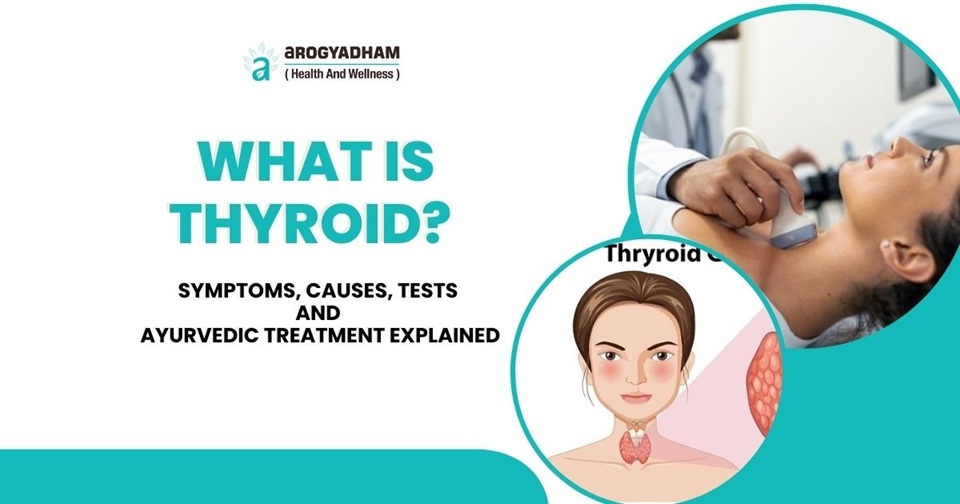
What Is Thyroid? Symptoms, Causes, Tests and Ayurvedic Treatment Explained
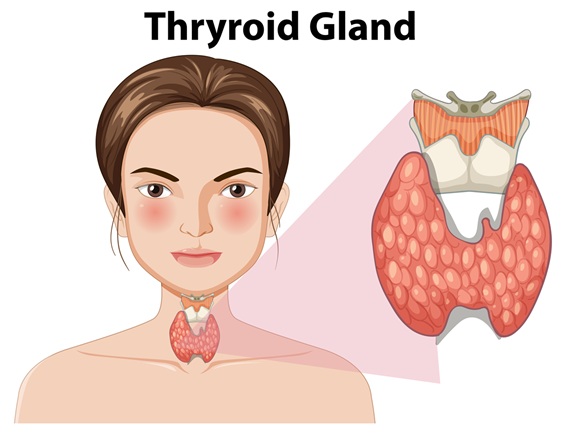
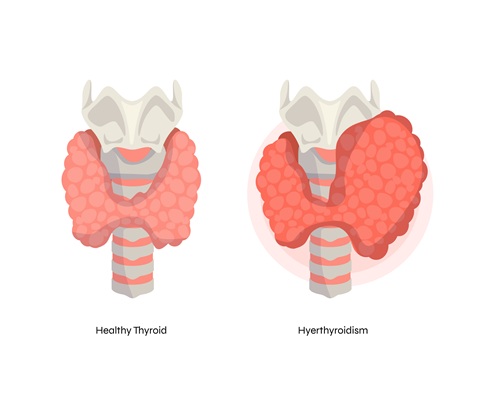
The thyroid is a small, butterfly-shaped gland in the front of your neck. It makes hormones that control how fast your body uses energy. When it makes too little or too much of these hormones, you feel it everywhere: your weight, your mood, your sleep, your periods, even your hair.
In India, thyroid problems are far more common than most people think. Research published in the Indian Journal of Endocrinology and Metabolism estimates that around 42 million Indians live with a thyroid disorder. A large number of them do not know it yet, because the early signs look like ordinary tiredness.
This guide explains it simply: what the thyroid does, how thyroid problems start, the symptoms to watch for in women and men, which tests to take, what the TSH normal range means, and how Ayurveda approaches the condition.
What Is the Thyroid Gland?
The thyroid is a small gland at the base of your neck, just below the Adam’s apple. It produces two main hormones, T3 (triiodothyronine) and T4 (thyroxine), which control your metabolism, body temperature, heart rate and energy levels.
Think of the thyroid as your body’s thermostat.
Your brain’s pituitary gland keeps an eye on it. When hormone levels drop, the pituitary releases TSH (Thyroid Stimulating Hormone) to tell the thyroid, “make more.” When levels are high, TSH goes down.
This is why a TSH test tells doctors so much. A high TSH usually means the thyroid is underactive. A low TSH usually means it is overactive.
The thyroid needs iodine to make its hormones. Your body cannot produce iodine on its own, so it has to come from your food.
Types of Thyroid Disorders
| Condition | What happens | Common signs |
|---|---|---|
| Hypothyroidism | Thyroid is underactive, makes too little hormone | Weight gain, tiredness, feeling cold, constipation |
| Hyperthyroidism | Thyroid is overactive, makes too much hormone | Weight loss, fast heartbeat, anxiety, sweating |
| Hashimoto’s thyroiditis | Immune system attacks the thyroid (autoimmune) | Slow-developing hypothyroidism, neck swelling |
| Graves’ disease | Immune system overstimulates the thyroid | Hyperthyroidism, bulging eyes, tremors |
| Goitre | Thyroid enlarges and swells | Visible swelling in the neck, tight feeling in throat |
| Thyroid nodules | Lumps grow inside the gland | Often no symptoms, found during a scan |
Hypothyroidism is by far the most common of these in India.
How Do We Get Thyroid Problems?
Thyroid problems develop when the gland is damaged, inflamed, or not getting what it needs. The most common reasons are iodine deficiency, autoimmune disease, long-term stress, pregnancy and childbirth, family history, and certain medicines.
Here is what actually causes it:
1. Iodine imbalance: Too little iodine is the oldest and most common cause worldwide. But too much iodine, often from over-supplementing, can also disturb the gland.
2. Autoimmune conditions: In Hashimoto’s thyroiditis, the immune system mistakenly attacks the thyroid. This is now the leading cause of hypothyroidism in Indian cities. A simple Anti-TPO blood test can detect it.
3. Long-term stress: Chronic stress keeps cortisol high. High cortisol slows down the conversion of T4 into the active T3 hormone. This is one reason so many working adults develop thyroid issues in their 30s.
4. Pregnancy and childbirth: Hormone levels shift sharply after delivery. Some women develop postpartum thyroiditis, which can be temporary or permanent.
5. Family history: If your mother, father or sibling has a thyroid disorder, your own risk goes up noticeably.
6. Other causes: Thyroid surgery, radiation to the neck, and medicines such as lithium or amiodarone can all affect the gland.
7. Poor digestion and gut health: Around 20% of T4 is converted into active T3 in the gut. Weak digestion means poor conversion, a point Ayurveda has emphasised for centuries, and one modern research now supports.
Thyroid Symptoms: What to Watch For
Thyroid symptoms build up slowly. That is exactly why they get missed. Most people blame work pressure or age before they think of getting a blood test.
Hypothyroidism Symptoms (Underactive Thyroid)
- Constant tiredness, even after a full night’s sleep
- Weight gain without eating more
- Feeling cold when others are comfortable
- Dry skin and brittle nails
- Hair fall, especially from the outer eyebrows
- Constipation
- Puffy face, particularly around the eyes
- Low mood, poor memory, difficulty concentrating
- Muscle aches and joint stiffness
- Slow heart rate
- Hoarse voice
Thyroid Symptoms in Females
Women are about 8 to 10 times more likely than men to develop a thyroid disorder. Along with the symptoms above, women often notice:
- Irregular, heavy or very painful periods
- Difficulty conceiving, or repeated miscarriage
- Worsening PMS
- Sudden hair thinning
- Early menopause symptoms
- Overlap with PCOS — the two conditions frequently occur together

Thyroid Symptoms in Male Patients
Men get diagnosed far later, mostly because thyroid is wrongly seen as a “women’s problem.” In men, look for:
- Low energy and reduced stamina
- Loss of muscle mass despite regular workouts
- Low libido or erectile difficulty
- Reduced sperm count and fertility issues
- Unexplained weight gain around the belly
- Irritability and low motivation
- Thinning beard or body hair
If you are a man over 35 with persistent fatigue and no clear reason, ask for a thyroid profile. It takes one blood test.

Hyperthyroidism Symptoms (Overactive Thyroid)
- Weight loss despite a good appetite
- Rapid or irregular heartbeat, palpitations
- Anxiety, restlessness, irritability
- Excessive sweating, heat intolerance
- Trembling hands
- Loose motions
- Difficulty sleeping
- Bulging eyes (in Graves’ disease)
Thyroid and Hormonal Imbalance: Why It Affects Everything
Your hormones do not work in isolation. They work as a team.
When thyroid hormones go off balance, the effect spreads. Thyroid problems disturb oestrogen and progesterone, which is why periods become irregular. They affect insulin, which is why weight becomes harder to control. They influence cortisol, which is why stress feels heavier than it should.
This is why treating a hormonal imbalance only by looking at one number rarely works well over time. The whole system needs attention — sleep, digestion, stress and nutrition together.
Thyroid Tests and TSH Normal Range
The main thyroid test is the TSH test. For most adults, the TSH normal range is 0.4 to 4.0 mIU/L. A TSH above this range suggests hypothyroidism. A TSH below it suggests hyperthyroidism. T3, T4 and Anti-TPO tests are used to confirm the cause.
Thyroid Test Reference Ranges
| Test | Normal range (adults) | What it indicates |
|---|---|---|
| TSH | 0.4 – 4.0 mIU/L | Main screening test |
| Free T4 | 0.8 – 1.8 ng/dL | Active thyroxine level |
| Free T3 | 2.3 – 4.2 pg/mL | Most active thyroid hormone |
| Total T4 | 5.0 – 12.0 µg/dL | Overall thyroxine |
| Total T3 | 80 – 200 ng/dL | Overall triiodothyronine |
| Anti-TPO antibodies | Below 35 IU/mL | Detects autoimmune thyroid disease |
Note: Ranges vary slightly between laboratories. Always read your report against the range printed on it.

How To Read Your Result
- TSH high, T4 low → Hypothyroidism
- TSH high, T4 normal → Subclinical hypothyroidism (early stage)
- TSH low, T4 high → Hyperthyroidism
- Anti-TPO high → Autoimmune thyroid disease, likely Hashimoto’s
In pregnancy, the target TSH is stricter — usually below 2.5 mIU/L in the first trimester. If you are pregnant or planning to conceive, get tested early.
Testing tip: Take the test in the morning, before eating. TSH is naturally highest early in the day, and this keeps your results consistent across reports.
Thyroid in Ayurveda: The Galaganda Perspective
Ayurveda described thyroid-related disorders long before blood tests existed. Classical texts, including the Charaka Samhita and Sushruta Samhita, refer to neck swelling and related symptoms as Galaganda.
Ayurveda does not look at the thyroid as an isolated gland. It looks at why the body lost its balance in the first place.
- Agnimandya, weak digestive fire. In Ayurveda, Agni governs digestion and metabolism at every level, from the stomach to the cells. When Agni weakens, metabolism slows. This closely mirrors what happens in hypothyroidism.
- Ama, metabolic toxins. Weak digestion leaves behind partly digested residue called Ama. This sticky waste blocks the body’s channels, or srotas, and interferes with normal hormone signalling.
- Dosha involvement. Hypothyroidism is largely a Kapha-Vata disorder — heaviness, sluggishness, cold, and weight gain. Hyperthyroidism is more of a Pitta-Vata disorder — heat, restlessness, rapid metabolism and weight loss.
- Affected channels. Thyroid disorders mainly involve Rasavaha srotas (nutrition and lymph) and Medovaha srotas (fat metabolism).
The treatment aim follows from this: restore Agni, clear Ama, balance the disturbed doshas, and nourish the tissues. Suppressing a symptom is not the goal. Restoring function is.
Ayurvedic Treatment for Thyroid
At Arogyadham Health, the Ayurvedic Treatment For Thyroid always begins with a full assessment, your reports, your prakriti (body constitution), your digestion, your sleep and your stress levels. Two people with the same TSH number often need very different plans.
Treatment usually combines four elements.
1. Ayurvedic Herbs for Thyroid
| Herb | Traditional use in thyroid care |
|---|---|
| Kanchanar Guggulu | The classical formulation for Galaganda; supports healthy glandular tissue and helps reduce swelling |
| Ashwagandha | Supports T4 levels and helps the body handle stress; widely studied for subclinical hypothyroidism |
| Brahmi | Helps with brain fog, poor memory and low mood |
| Punarnava | Reduces water retention and puffiness |
| Guggulu | Supports fat metabolism and healthy weight |
| Triphala | Improves digestion and clears Ama gently |
| Shilajit | Supports energy and overall vitality |
| Varunadi Kashayam | Traditionally used to clear blocked channels |
Please Note: these herbs should be taken only under a qualified Ayurvedic doctor’s guidance. Dosage depends on your condition, your reports and the other medicines you take. Self-medicating with thyroid herbs can cause harm, Ashwagandha, for example, is not suitable in hyperthyroidism.
2. Panchakarma
For suitable patients, Panchakarma therapy helps remove accumulated Ama and reset metabolism:
- Virechana — controlled purgation to clear excess Pitta and toxins
- Nasya — medicated oil through the nasal passage, which works directly on the head and neck region
- Udvartana — herbal powder massage that stimulates circulation and supports weight management
- Abhyanga and Swedana — oil massage and steam to calm Vata and ease stiffness
Panchakarma is not for everyone, and it is never a DIY treatment. It needs proper assessment and supervision.
3. Diet: Pathya and Apathya
Foods that help (Pathya)
- Moong dal, warm soups and khichdi, light and easy to digest
- Cooked vegetables such as bottle gourd, pumpkin and carrot
- Coconut oil and A2 cow ghee in moderate amounts
- Soaked almonds, walnuts and flax seeds
- Brazil nuts, dates and figs for selenium and minerals
- Warm water through the day
- Ginger, cumin, black pepper and turmeric
Foods to limit (Apathya)
- Raw cabbage, cauliflower, broccoli and raw soy — cooking reduces their goitrogenic effect, so you do not need to avoid them completely
- Refined sugar and maida
- Packaged and deep-fried foods
- Excess caffeine
- Cold drinks and curd at night
- Alcohol and smoking
One practical point: keep a gap of at least 30 to 45 minutes between your thyroid medicine and your tea, coffee, milk or calcium supplement. Taken together, absorption drops.
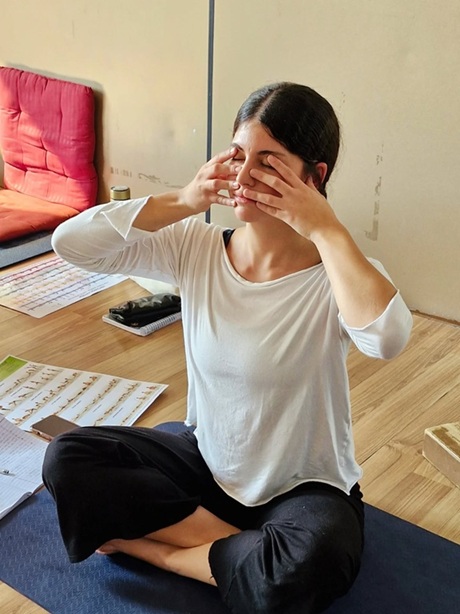
4. Yoga and Pranayama
These postures work directly on the neck region and improve blood flow to the thyroid gland:
- Sarvangasana (shoulder stand)
- Halasana (plough pose)
- Matsyasana (fish pose)
- Setu Bandhasana (bridge pose)
- Ustrasana (camel pose)
- Ujjayi pranayama and Bhramari pranayama for stress and calm
Avoid inversions if you have high blood pressure, neck injury or are pregnant. Learn them from a trained teacher first.
5. Lifestyle
- Sleep by 10:30 pm. Thyroid repair happens overnight.
- Walk for 30 minutes daily.
- Get 15 minutes of morning sunlight for vitamin D.
- Get your vitamin D, B12 and iron checked — deficiencies in these make thyroid symptoms much worse.
- Keep meal timings regular.
Can Thyroid Be Cured Permanently with Ayurveda?
The honest answer is that it depends on the cause and the stage.
Early-stage and subclinical hypothyroidism often responds very well. Many patients see TSH levels improve and symptoms settle with consistent Ayurvedic treatment, diet correction and lifestyle change.
Where the thyroid gland has been significantly damaged, long-standing Hashimoto’s, or after thyroid surgery, Ayurveda can improve quality of life, reduce symptoms and support overall health, but hormone replacement may still be needed.
Never stop your prescribed thyroid medication on your own. Any change in dosage must be guided by your doctor and backed by fresh blood reports. At Arogyadham Health, we work alongside your existing treatment, not against it, and we track your reports as we go.
Be cautious of anyone promising a guaranteed permanent cure without seeing your reports. That is a warning sign, not a treatment plan.
When to See a Doctor
Get a thyroid profile done if you have:
- Tiredness that does not improve with rest
- Unexplained weight change
- Irregular periods or trouble conceiving
- Visible swelling in the neck
- A family history of thyroid disease
- Ongoing hair fall, dry skin or low mood
Seek medical care urgently for severe neck swelling that affects breathing or swallowing, a very fast or irregular heartbeat, or sudden extreme weakness and confusion.
Also Read: पेट की चर्बी कम करने के आयुर्वेदिक उपाय
Get Your Thyroid Assessed at Arogyadham Health
Thyroid care works best when it is personal. The same TSH reading can mean very different things in two different people.
At Arogyadham Health & Wellness, our Ayurvedic doctors review your reports, understand your body constitution and daily routine, and build a plan around herbs, diet, Panchakarma and lifestyle that fits your life, not a standard prescription.
Book your consultation or message us on WhatsApp for a quick first conversation.
Medical disclaimer: This article is for general information only and is not a substitute for professional medical advice, diagnosis or treatment. Always consult a qualified doctor before starting, stopping or changing any medicine or herbal supplement.
Frequently Asked Questions
Q1. What is the normal TSH range?
Ans: For most adults, the TSH normal range is 0.4 to 4.0 mIU/L. In pregnancy the target is lower, usually below 2.5 mIU/L in the first trimester. Always compare your result with the range printed on your lab report.
Q2. How do we get thyroid problems?
Ans: Most commonly through iodine imbalance, autoimmune conditions such as Hashimoto’s, long-term stress, pregnancy, family history, or certain medicines. Poor digestion and nutrient deficiencies also play a role.
Q3. What are the first signs of a thyroid problem?
Ans: Persistent tiredness, unexplained weight change, hair fall, dry skin, feeling unusually cold or hot, and irregular periods in women. These build up gradually, which is why they are often missed.
Q4. Can men get thyroid problems?
Ans: Yes. Thyroid symptoms in male patients include fatigue, muscle loss, low libido, fertility issues, belly weight gain and low mood. Men are diagnosed later on average because the condition is wrongly assumed to affect only women.
Q5. Does thyroid cause weight gain?
Ans: Hypothyroidism slows metabolism and typically causes 3 to 7 kg of weight gain, much of it water retention. Once hormone levels stabilise, weight becomes much easier to manage.
Q6. Can I take Ashwagandha for thyroid?
Ans: Ashwagandha may support underactive thyroid function, but it is generally not advised in hyperthyroidism, as it can raise hormone levels further. Take it only under a qualified doctor’s guidance.
Q7. Should I stop eating cabbage and broccoli?
No. Cooking reduces their goitrogenic effect substantially. Moderate cooked portions are fine for most people. Large amounts of raw cruciferous vegetables or raw soy are better limited.
Q8. How long does Ayurvedic thyroid treatment take?
Ans: Most patients notice symptom improvement within 6 to 8 weeks. Measurable changes in reports usually take 3 to 6 months. The timeline depends on how long the condition has existed and how consistently the plan is followed.
Q9. Is thyroid hereditary?
Ans: There is a strong genetic link. If a close family member has a thyroid disorder, get yourself screened once a year.
Q10. Can Ayurveda and allopathic thyroid medicine be taken together?
Ans: Yes, in most cases, but only with proper supervision and spaced timings. Tell your Ayurvedic doctor exactly what you are taking and at what dose.
This article is for general information and is not medical advice. If you have a respiratory or heart condition, are pregnant, or are unsure whether these practices suit you, please speak to your doctor before beginning.
- डायबिटीज़ क्या है? कारण, लक्षण, प्रकार, बचाव और उपचार की पूरी जानकारी

- What Is Thyroid? Symptoms, Causes, Tests and Ayurvedic Treatment Explained
- Urinary Tract Infection (UTI): Symptoms, Causes, Treatment & Why UTIs Keep Coming Back

- What Is Shilajit? Real Benefits, Safe Dosage & How to Avoid Fakes

- पेट की चर्बी कम करने के आयुर्वेदिक उपाय

Ready to Heal Naturally?


Share With
Friends
Dr. Rakesh Agarwal, a third-generation Ayurveda expert and research scholar, treats chronic ailments through Ayurveda and Panchakarma. He is also the founder-editor of Arogyadham Magazine, promoting Ayurveda and wellness to over a million readers since 1992.






Dr. Arjun Raj, an Ayurvedic physician and wellness expert, is the Director of Arogyadham Health Care and serves on the executive board of Arogyadham Health and Wellness. He blends traditional Ayurveda with modern wellness to promote balanced, healthy living.
Dr. Amrit Raj, an Ayurvedic doctor and certified yoga teacher, is the Director of Arogyadham Health and Wellness. He specializes in chronic conditions and actively promotes Ayurveda and yoga worldwide for healthier living.